


2026 STITCH-CON WOMEN THROUGH HISTORY
In celebration of our country's 250th birthday, we decided to take a closer look at the impact that women have had on our nation in many walks of life. Each Keepsakes team member selected a woman to research and these short histories are tucked away all over Stitch-Con. We hope you enjoy learning about these fascinating women!

ANNI ALBERS


By Katie Sgambellone
Anni Albers was a groundbreaking weaving and multi-media artist in the early 20th century.
She was born in Germany on June 12, 1899 to a Jewish family that was of Protestant faith. Her family had encouraged her artistic talent with tutors at a young age, teaching figure drawing and Impressionist art.
As an adult, Anni was accepted into the weaving program at the Bauhaus where she would eventually meet her husband Josef. They were married in 1925 as he taught at the Bauhaus and she created many large scale woven wall hangings.
In 1933, rather than comply with the Third Reich, Anni and Josef fled to America with the help of several benefactors including Mrs. John D. Rockefeller. They settled in North Carolina where Josef began teaching at Black Mountain College, with Anni initially translating for him. She eventually began teaching weaving at the college herself creating many stand alone art pieces.
In 1949 Anni became the first woman and the first textile artist to have a solo exhibit at the New York Museum of Modern Art. In the 1950's she got in to making prints and in the 1970s and 1980s she designed many mixed media weavings. Anni departed this Earth on May 9, 1994
VIRGINIA APGAR

By Mary Bloom
Virginia Apgar (1909-1974), a leader in the fields of anesthesiology and teratology, invented the Apgar score in 1952.
The Apgar score is used in most labor and delivery rooms to assess how a newborn child is doing upon delivery. It is an important measurement used so nurses and doctors could rapidly assess a newborn’s health upon delivery.
The acronym APGAR was later developed to stand for Appearance (skin color), Pulse (heart rate), Grimace (reflex irritability), Activity (muscle tone), and Respiration.
A friend of Virginia Apgar stated that “she probably did more than any other physician to bring the problem of birth defects out of back rooms.”
NELLIE BLY
By Jen Grimes
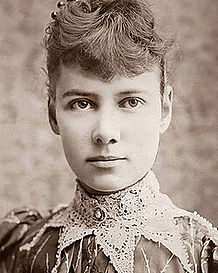
Investigative journalist Nellie Bly was born Elizabeth Jane Cochran in Burrell Township, Pennsylvania on May 5th, 1864. One of 15 siblings, her father died when she was 6. In 1879, aged 15, she enrolled at Indiana Normal School ( now known as Indiana University of Pennsylvania), however, she could only afford one term.
In 1885, the Pittsburgh Dispatch ran an article titled "What Girls Are Good For" that stated women and girls are good for "birthing children" and "keeping house". Elizabeth fired off a response that impressed the editor to the point that he hired her to write more stories on women.
Taking the name Nellie Bly from the title of a Stephen Foster song, Nellie went undercover in factories and wrote exposes on the abysmal working conditions for women. The factory workers rejoiced when the secrets were out. The factory owners did not, and Nellie was reassigned to the "women's pages".
Nellie declined, and at the age of 21, she took off to Mexico to serve as a foreign correspondent. It took 6 months before she was forced to flee Mexico for an article she wrote protesting the arrest of another journalist who had criticized the Mexican Government.
Back in the US, Nellie declined to return to Pittsburgh and instead headed for New York. Four months later, she was hired by the New York World to go undercover as a patient to investigate reports of brutality and neglect at the Women's Lunatic Asylum on Roosevelt Island. After ten days at the asylum and an intervention by attorneys of The World, Nellie was released. At the age of 23, her report was published in book form and was titled "Ten Days in a Madhouse". It's sensationalism caused the asylum to implement reform and brought into the mainstream the experiences of marginalized women.
In 1889, Nellie took inspiration from Jules Verne's Around the World in Eighty Days by circumnavigating the Earth. After 72 days, Nellie arrived back in New York on January 25th 1890.
In 1895, Nellie married steel manufacturer Robert Seaman. She was 31, he was 73. After Robert's death in 1904, Nellie tried to run the manufacturing company, but was ultimately unsuccessful.
By 1913, Nellie was back at reporting, this time for the New York Evening Journal. She covered the Woman Suffrage Procession, accurately predicting that the US would give women the right to vote in 1920.
During WWI, Nellie reported from Europe's Eastern Front. She was the first woman to visit the war zone between Serbia and Austria and was even arrested when shexwas mistaken for a British spy.
Nellie Bly died of pneumonia on January 27th, 1922. Her legacy lives on in all of the female journalists who have followed in her footsteps.
JACKIE COCHRAN

By Joe Dial
-
Self-made woman. Grew up in rural Florida during the Great Depression.
-
Started her own company in women's makeup.
-
Began flying in the 1930s and quickly became a talented pilot.
-
Made a significant contribution to the war effort in World War II by advocating for women pilots to assume non-combat flying positions.
-
An amazing side effect of World War II is that women were able to take a variety of jobs outside of the home. This period is often referred to as the second wave of women's rights. Women of all stripes did work normally reserved for men, and proved they could cut it as good as any man.
-
Jackie Cochran spearheaded different actions to promote female pilots, most famous being the WASPs (Women's Airforce Service Pilots). These women flew a wide variety of fighter aircraft and bombers in noncombat roles. They flew over 60 million miles; transported every type of military aircraft; towed targets for live fire practice; simulated ground strafing missions and transported cargo. Thirty-eight WASP members died during these duties.
-
In 1945, Cochran became the first civilian woman to receive the Distinguished Service Medal for her wartime leadership.
-
After World War II she was the first female pilot to break the sound barrier.
ANNA DUNLEVY

By Melinda Briggs
The only thing standing between Anna Dunlevy and ruin was a needle and thread....
Irish immigrant Anna Dunlevy came to the United States in 1864 at the age of 14. She settled in Cincinnati and began working as a sales assistant for Le Boutillier and Simpson, a fancy goods dealer. In the 1880 census, Anna was already married to Patrick Dunlevy and had five children.
To supplement Patrick’s meager laborer wages, Anna had begun to make dresses in the family flat by 1889. Tragically in 1894, Patrick drowned in the Ohio River, leaving Anna with six children and no means of support. She could neither read nor write. Yet she had her needle.
Anna had an eye for unusual fabrics and for combining seemingly incongruous patterns and colors to create a harmonious whole. In a time before mass-produced clothing, Cincinnati’s well-to-do fashion-conscious women sought out dressmakers with skills like Anna’s and soon, word spread about her talents. In just a few years, Dunlevy had built a profitable customer base amongst the city’s wealthiest women.
At a period in history when women did not run businesses, Anna employed at least 12 women seamstresses, giving other females like her an opportunity for financial independence. The Dunlevy salon at Fourth and Race Streets in Cincinnati was renowned for its workmanship, design and attention to detail.
Dunlevy is regarded as one of America’s major fashion influencers of the time, regularly traveling to Paris to bring back designs and fabrics for her customers. She remained in business for a total of 24 years.
ELLA FITZGERALD

By Natashia Metz
Ella Fitzergerald was an American Jazz singer known for her purity of tone, extraordinary range, and innovative scat singing. She was dubbed the “Queen of Jazz” and the “First Lady of Song”, rising to fame in the 1930s.
Despite many upheavals in her childhood, Ella found success in her musical career with the Chick Webb Orchestra as they performed across the country. One of the more memorable pieces for Ella was her swing-style rendition of the nursery rhyme “A-Tisket, A-Tasket”, which set the stage for her rise to fame. When Chick Webb died in 1939, Fitzgerald took over the band only to leave it in 1942 to pursue her own solo career.
Not just a musical artist, Ella appeared in films as well as popular tv shows throughout the second half of the twentieth century. She continued her solo career the remainder of her life but was also creating music with many other musical icons, such as Louis Armstrong, Duke Ellington, and The Ink Spots. Recognizable songs from these collaborations include “Dream a Little Dream of Me”, “Cheek to Cheek”, and “It Don’t Mean a Thing (If It Ain’t Got That Swing)”.
In 1993, Ella gave her final public performance after nearly 60 years of musical talent. She passed away just three years later at the age of 79. Over the course of her lifetime, she received 14 Grammy Awards, the National Medal of Arts, the NCAAP’s inaugural President’s Award, and the Presidential Medal of Freedom.
KATHERINE JOHNSON

By Jan Reider
-
Born in White Sulphur Springs, West Virginia, in 1918, her intense curiosity and brilliance with numbers vaulted her ahead several grades in school.
-
By 13, she was attending the high school on the campus of historically black West Virginia State College.
-
At 18, she enrolled in the college and became the third African American to earn a Ph.D. in mathematics.
-
She graduated with highest honors in 1937 and took a job teaching at a black public school.
-
In 1939, she left her teaching job in West Virginia and enrolled in the graduate math program.
-
In 1952, a relative told her about open positions at the all-black West Area Computing section at the National Advisory Committee for Aeronautics’ (NACA’s) Langley laboratory, headed by fellow West Virginian Dorothy Vaughan.
-
She spent the next four years analyzing data from flight tests and worked on the investigation of a plane crash caused by wake turbulence. As she was wrapping up this work her husband died of cancer in December 1956.
-
The 1957 launch of the Soviet satellite Sputnik changed history—and Johnson’s life. Engineers from those groups formed the core of the Space Task Group, the NACA’s first official foray into space travel. Johnson, who had worked with many of them since coming to Langley, “came along with the program” as the NACA became NASA later that year.
-
In 1960, she became the first woman in the Flight Research Division to co-author a research report.
-
In 1961, she performed trajectory analysis for the first American human space flight, Alan Shepard’s mission Freedom 7.
-
In 1962, she was a prominent contributor to America’s first human orbit around the Earth; John Glenn, the astronaut in the Friendship 7 mission, personally asked for her to check the numbers by hand. He did not fully trust the new electronic computers, and declared that “if she says they’re good, I’m good to go.”
-
She worked with fellow mathematicians Dorothy Vaughan and Mary Jackson, whose stories were later featured in the film "Hidden Figures."
-
Johnson’s calculations contributed to many more flight missions, including the 1969 mission to the moon, Apollo 11.
-
When asked to name her greatest contribution to space exploration, Johnson would talk about the calculations that helped synch Project Apollo’s Lunar Module with the lunar-orbiting Command and Service Module. She also worked on the Space Shuttle and the Earth Resources Technology Satellite (ERTS, later renamed Landsat) and authored or coauthored 26 research reports.
-
She retired in 1986, after 33 years at Langley. “I loved going to work every single day,” she said.
-
In 2015, at age 97, Johnson added another extraordinary achievement to her long list: President Barack Obama awarded her the Presidential Medal of Freedom, America’s highest civilian honor.
-
In 2020 she died at the age of 101 years old.
ELIZABETH KECKLEY
By Susan Coates
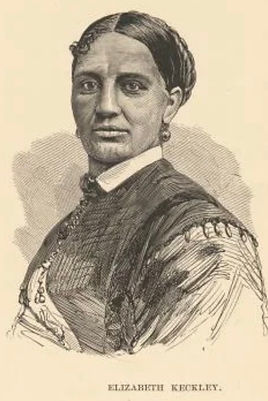
Elizabeth Hobbs Keckly (often spelled “Keckley”) was an African American seamstress and author. While often remembered for her association with First Lady Mary Todd Lincoln, Keckly was also notable as a resolute woman who purchased her own freedom, provided relief to freed slaves during and after the Civil War, and wrote an autobiography detailing her extraordinary life.
Born in 1818, Keckly was the only child of her mother Agnes, a literate, enslaved domestic servant, and her enslaver, Virginia planter Armistead Burwell.
Eizabeth learned her sewing skills from her mother. She became a skilled seamstress and dressmaker for many wealthy members of the community. She was a highly sought after and was loaned out for payment to her owners
In 1855, after being a slave for 30 years, Elizabeth purchased freedom for herself, her son George and her Husband John for $1,200.
n 1860, Keckly moved to Washington, D.C. and began building a dressmaking business that once again catered to wealthy and influential women. In 1861, a client recommended her to the President’s wife, Mary Todd Lincoln. Keckly soon became the First Lady’s personal dressmaker and developed a close friendship with her and the family in the White House. Keckly’s business prospered, allowing her to employ 20 women in her dressmaking shop. With other women in her church, she formed a relief association to assist the many formerly enslaved people in the city.
Mrs. Lincoln relied upon Keckly’s companionship and assistance in the weeks after her husband’s assassination, and after her return to Illinois they corresponded frequently.
In 1868 when Keckly detailed the event in her autobiography Behind the Scenes or Thirty Years A Slave, and Four Years in the White House.
After the publication of her autobiography, Keckly persevered as a dressmaker, and she became known for training young African American seamstresses. In 1892, she accepted the position as the head of the Department of Sewing and Domestic Science Arts at Ohio’s Wilberforce University.
Elizabeth died in 1907 following a stroke.
MARY DIXON KIES

By Barb Blankenship
Women make history all the time, but they usually do it with what’s in their head instead of what’s on it. But on May 5, 1809, 217 years ago, a woman named Mary Dixon Kies used both brains and bonnet to become the United States’ first woman to receive a patent.
Mary Dixon was born in Killingly, Connecticut on March 21, 1752. She married John Kies, who died on August 18, 1813, at the age of 63. She then lived with her son Daniel in Brooklyn, New York, until her death at age 85 in 1837.
In the early 19th century American women had no political power and even less social power. Women’s legal existences were melded with those of the men in their lives. As daughters, their property belonged to their father; as wives, it belonged to their husbands. If they were unmarried and lived in a household with an uncle or brother, that man controlled her legal destiny. In a land where women could neither own goods nor enter in to contracts, there was little incentive for women to pursue patents.
This Connecticut woman had an idea worth patenting. It came to her during a time of fashion emergency in the United States. The Napoleonic Wars between France and Britain put the United States in an awkward political position in 1807. Britain wanted to see if the United States could stay neutral by harassing American ships and slapping trade restrictions on seafaring traffic. President Thomas Jefferson decided to prohibit the import of British goods with the Embargo of 1807. Unfortunately, that proved to be disastrous, crippling the American economy.
Just 15 months of embargo forced the American fashion industry to turn inward. Now that New England couldn’t receive goods, they had to be made. American-made hats were needed to replace the European millinery.
Kies wasn't the first woman to improve hat making at the time. Betsy Metcalf, a young girl who, after seeing a straw hat in a store window that she couldn’t afford, went home and came up with an innovative technique to make her own. That idea turned New England into a hotbed for making straw hats, an activity that rural women could perform in their own homes. Women both braided straw and constructed bonnets at home, affording them financial independence of a sort and giving women elsewhere the chance to wear the latest fashions on top of their heads.
Metcalf never patented her straw hat-making technique, but when Mary Dixon Kies came up with her idea, she did. Her innovation was to weave silk or thread into the straw, creating a pleasing appearance that became a fashion fad. She took advantage the 1790 Patent Act, a relatively new law, which allowed “any person or persons” to petition for protection of their original methods and designs, and was granted the first patent ever awarded to a woman on May 5, 1809. Kies’ method took off and fueled the growing straw hat industry. Over $500,000 ($9 million today) worth of straw bonnets were produced in Massachusetts alone in 1810. New England’s hat industry was one of the few that survived the War of 1812.
When President James Madison became president that year, he signed Kies' patent and First Lady Dolley Madison, a great hat lover, was so taken by Kies' invention that she wrote to her and congratulated her for helping women in industry.
Mary Dixon Kies was just 1 of 20 women who were issued patents prior to 1840. We will never see her historic patent in person as a huge fire swept through the United States Patent Office in 1836 that destroyed approximately 10,000 patents, thousands of documents, drawings and pending patents.
Kies’ story ends sadly too. Fashions changed and she died penniless, in Brooklyn, New York. In 1965, however, members of the Killingly Historical and Genealogical Society, Inc. paid their respects to the groundbreaking woman whose fashion sense opened doors by setting a monument in South Killingly, Connecticut, which honors her as the first woman in the United States to apply for and receive a patent. She was inducted into the National Inventors Hall of Fame in 2006.
MARY EDMONIA WILDFIRE LEWIS

By Caroline Coates
"A true art innovator, groundbreaking pioneer, and iconoclast in the world of fine art, she become the first Black and Native American sculptress, and a combination of the two, to gain interventional reconfiguring in history. Mary was a woman ahead of her time—-more like a 21st century woman then a 19th century one. She was also a self-made woman at a time when blacks and Native Americans occupied the lowest rung of America’s social order.” — Mary Edmonia Lewis by Phillip Thomas Tucker, PH.D, pg. 2
Edmonia was regarded as a radical for her time, not just for her social and political beliefs; but also because she dared to depict Native American and African American people, especially women, in her art. Edmonia was a prolific creator in her life and her works focused on a variety of themes including: the Holy Bible, ancient and modern history, Black and Native American history, literature, and abolitionism. Many of her pieces can be found in the Smithsonian American Art Museum and other American museums.
Born in 1844, on what is estimated to be July 4th, Mary Edmonia Wildfire Lewis was the daughter of a Chippewa woman, Catherine, and a Free Black man, whose name has been lost to history. Edmonia was born in Upper New York near Greenbush and while much of her early life has been lost to time; she spent the first 12 years living with her mother’s people traveling through upper state New York and lower Canada; and being taught the traditional Chippewa designs and embroidery that were a part of everyday life for her community. This early introduction to traditional art would become the foundation that Edmonia’s later artistic endeavors would be built upon.
At age 13 she began school at New York Central College and at 16 entered Oberlin College in Ohio. School was initially a struggle for Edmonia in part due to her speaking Chippewa more easily and naturally than English, but also due to her rebellious and spirited nature. However, she was also smart, determined, and ambitious. She succeeded where many expected her to fail and proved to live up to her Chippewa name of Wildfire. While at Oberlin she would be introduced the neoclassical art, model drawing, and build her first connections to the Abolitionist movement. Oberlin would also be where Edmonia faced her first, though not the last, pains of Racism due to both her Chippewa and African heritage. She was a victim of racism, accused of poisoning two students and almost beaten to death by a White mob; she was driven out of Oberlin and eventually moved to Boston, Massachusetts to build a new home in the Abolitionist community there. This is also where Edmonia’s life at the first Native and African American female sculpture would begin.
While in Boston, Edmonia began to teach herself the art of sculpting. She was supported financially by her older brother Samuel and received artist guidance from the painter Edward Mitcheel Brackett. This would be where she sold her first piece of art, a clay statue of a woman’s foot, for $8 in the early 1860s. After 1865 Edmonia made the decision to move to Rome, Italy to pursue her career as sculptress full time. This is where she would remain until her death in 1909, creating beautiful, timeless, and awe inspiring pieces of art.
FRANCIS PERKINS
By Nicole Steinbeck
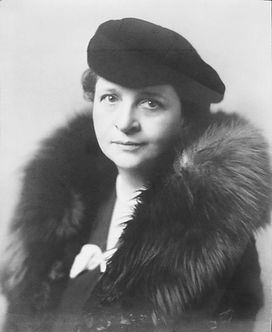
United States Secretary of Labor 1933-1945, first woman cabinet member and the longest serving Secretary of Labor in U.S. history.
.
Francis Perkins was born in 1880 in Massachusetts. She attended Mount Holyoke College where she majored in Physics with minors in Chemistry and Biology. In her last year of college she took a course in American economic history that changed the course of her career. The class required the students to tour the factories along the Connecticut River to observe current working conditions.
Francis later said of this experience “From the time I was in college I was horrified at the work that many women and children had to do in factories. There were absolutely no effective laws that regulated the number of hours they were permitted to work. There were no provisions which guarded their health nor adequately looked after their compensation in case of injury. Those things seemed very wrong.” Thus began her career in social work.
After college graduation, Francis taught at a girls’ school in Illinois for three years before moving to Philadelphia to attend the Wharton School. In 1907 she accepted a position as general secretary of the Philadelphia Research and Protective Association, an organization whose goal was to thwart the diversion of newly arrived immigrant girls and black women from the South into prostitution.
Francis moved to New York City and earned her Master’s Degree from Columbia University in 1910. She continued to advocate for workers’ rights and safety as she was appointed to numerous State office positions through the 1920’s, In these roles she worked closely with then New York Governor Franklin Roosevelt as they tackled the unemployment rates affecting the state during the Great Depression.
In 1933, she was appointed to the Secretary of Labor position under President FDR. Perkins was a forceful advocate for massive public works programs to bring the nation’s unemployed back to work. She was instrumental in the creation of numerous policies that revolutionized labor in the United States, including:
-
Social Security Act: Directed the development and passage of landmark law establishing old age pensions, unemployment insurance, and survivor benefits.
-
Fair Labor Standards Act: Maximum hours and minimum wages in all interstate industries; restrictions on child labor.
-
Bureau of Labor Standards: Industrial accident and occupational disease prevention; working condition improvements through research and union/employers conferences.
-
National Labor Relations Act: Right of workers to organize and collective bargaining.
After her term in the U.S. government, Francis worked for President Truman and wrote a biography of FDR (The Roosevelt I Knew) among other books. She taught economics at Cornell University until she died in 1985. Francis was married and had one daughter; her grandson played a large role in the Francis Perkins Center until his death in 2025. The Center is located in the brick house that was Francis’ homestead in Maine and is part of the National Park Service. Francis Perkins is buried in Newcastle, Maine.
MADAME C.J. WALKER

By Neisha Wiley
Hair care entrepreneur Madam C.J. Walker was first exposed to the hair care business in the late 1880s when she moved to St. Louis, Missouri. She worked for Annie Turnbo Malone, an African American hair care entrepreneur and owner of the Poro Company, selling her hair care products for about a year and a half in the city.
After experimenting with her own ingredients, Walker began marketing her products across the country. Her philosophy of “hair culture” grew to high demand among African Americans. In 1911, she incorporated the Madam C.J. Walker Manufacturing Company and began recruiting sales agents in major cities across the nation. Her efforts led to the creation of both the Madam C.J. Walker Hair Culturists Union of America and the National Negro Cosmetics Manufacturers Association in 1917.
Walker’s efforts provided African American women steady employment as well as a career they and their communities could find pride in.
VICTORIA WOODHULL

By Barbara Hils
Victoria was a trailblazer suffragist. She was the first woman to run for President of the United States in 1872. She ran against Ulysses S. Grant on a platform of suffrage, civil service reform and free love--the right to marry and divorce without legal constraints.
She was a huge supporter of women’s right to vote, but on Election Day in November of 1872, she spent it in a jail for exposing a scandal of a local prominent minister.
Victoria was born in 1837 in a tiny Ohio town called Homer. Her mother was a religious fanatic and her father was a con-man and thief. She was raised in a squalor and basically starved. She was given little education and was exploited as a clairvoyant and fortune teller in her father’s traveling carnival.
She was guided throughout her life through spirits which she considered to be her way out of poverty and misfortune.
After a disastrous first marriage, she began to change her life by becoming the first woman to own a Wall Street investment firm and founded a newspaper. She spoke before Congress demanding women be given voting privileges. She then ran for President and chose Abolitionist Frederick Douglass as her running mate, although he never acknowledged the nomination.
She believed women should practice free love, that included the idea of marrying for love not just for status. She believed a woman should have complete control of her body and not be subjected to sexual control and a man’s power over her. She was empowered by her spiritual guidance to challenge laws, the church and male dominance in society.
She was a powerhouse in her moment of time. She paved the way for women in 2026 to question, be honest, believe in your own personal power, value your mind, protect your body from harm and to fight for what is right and true.